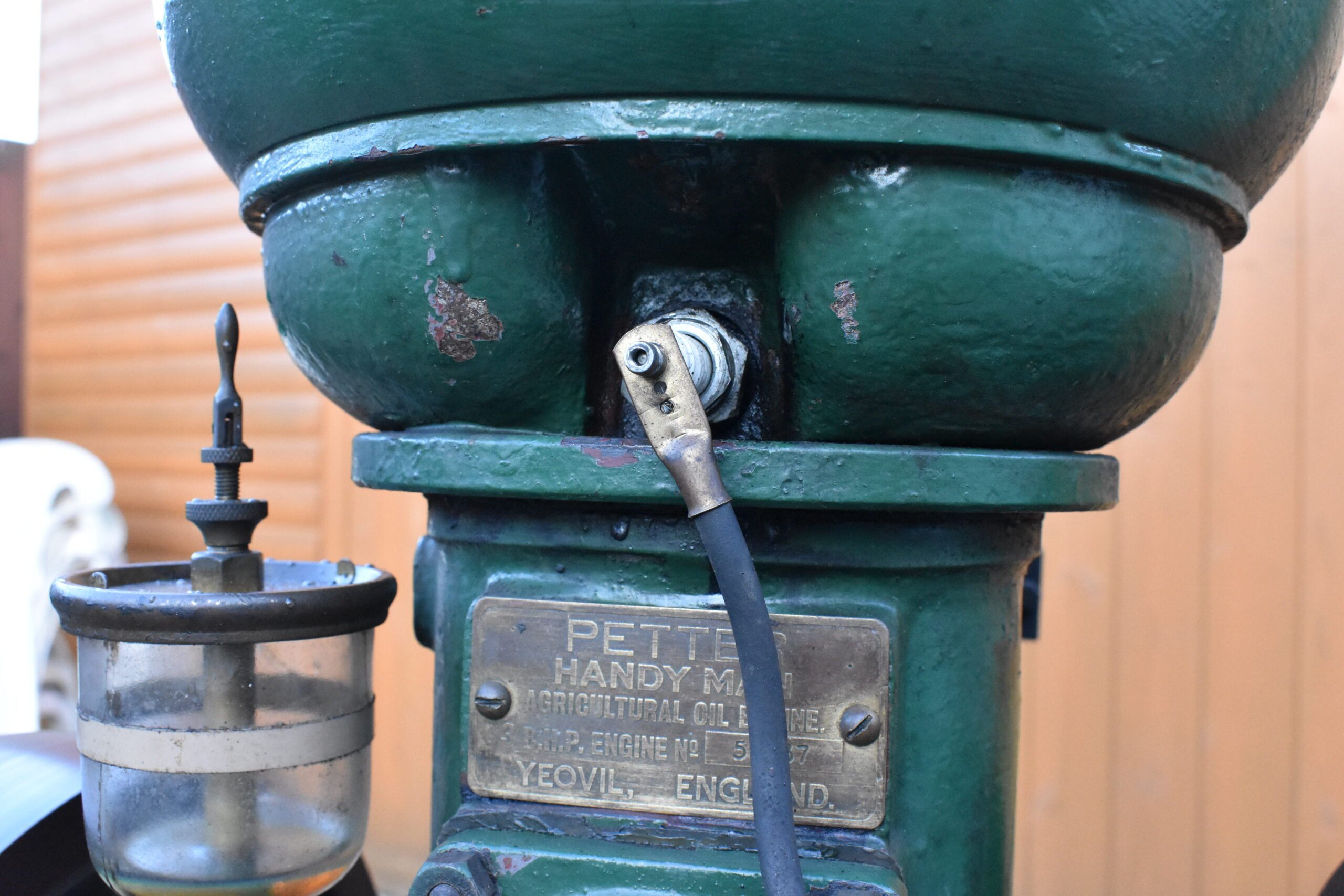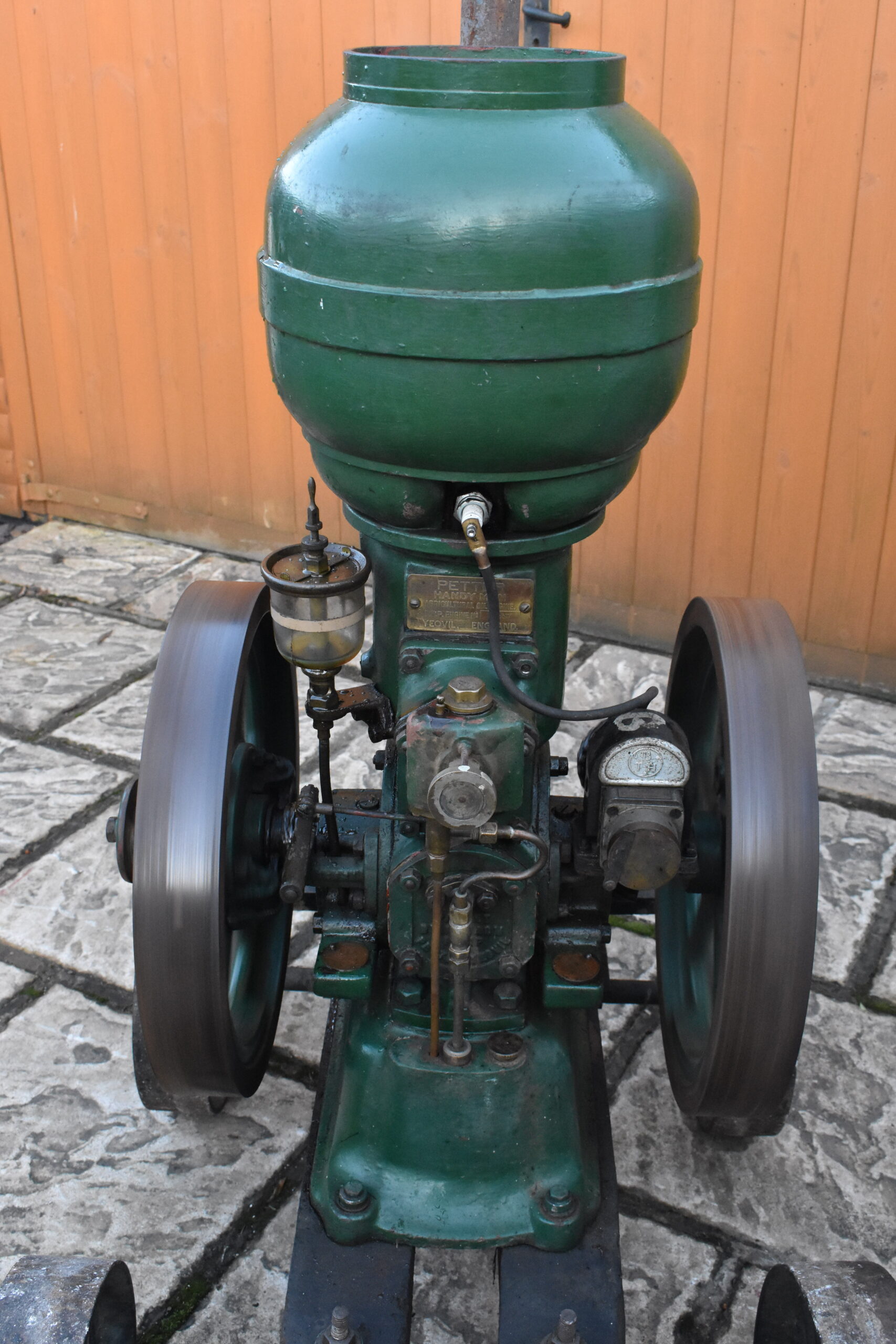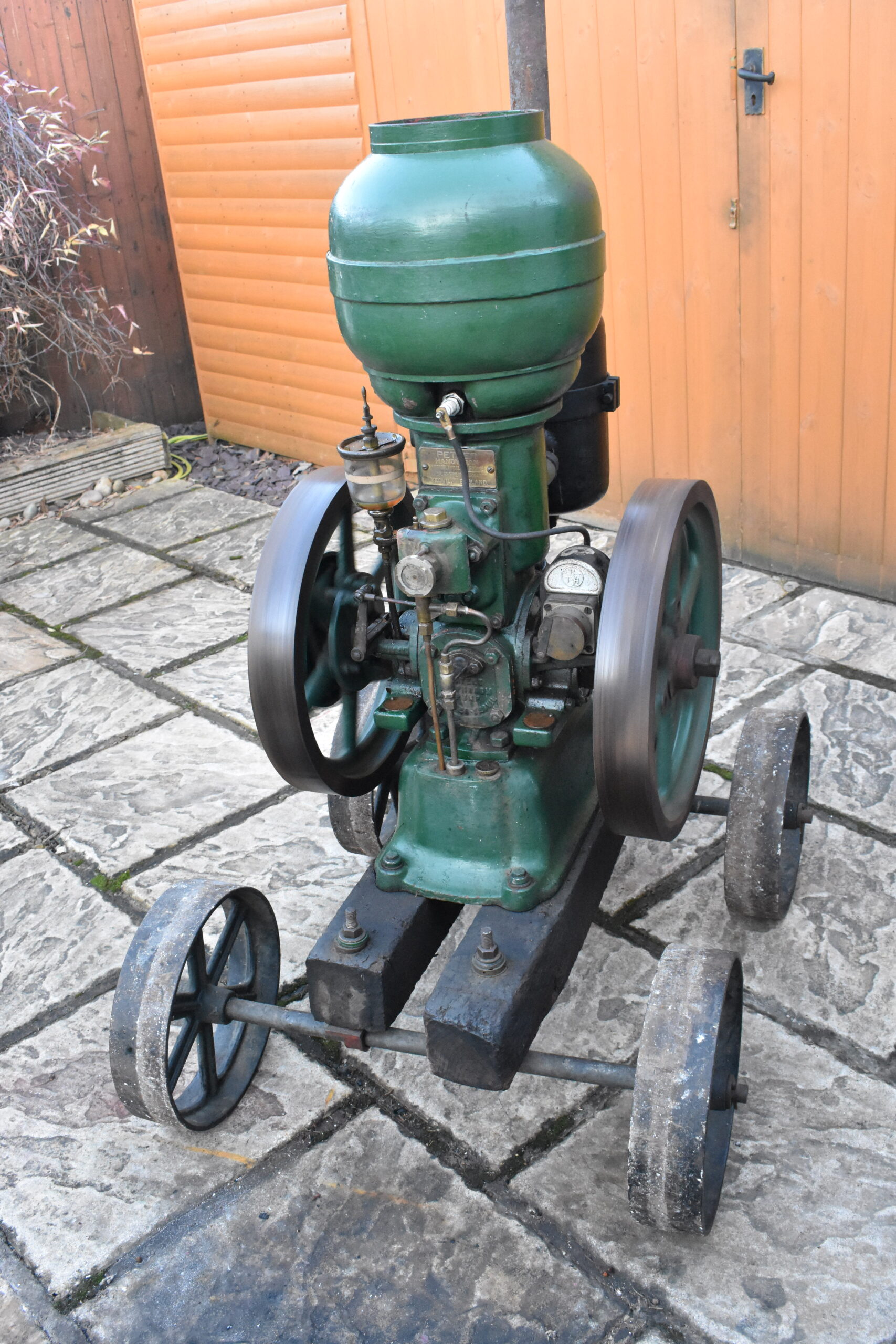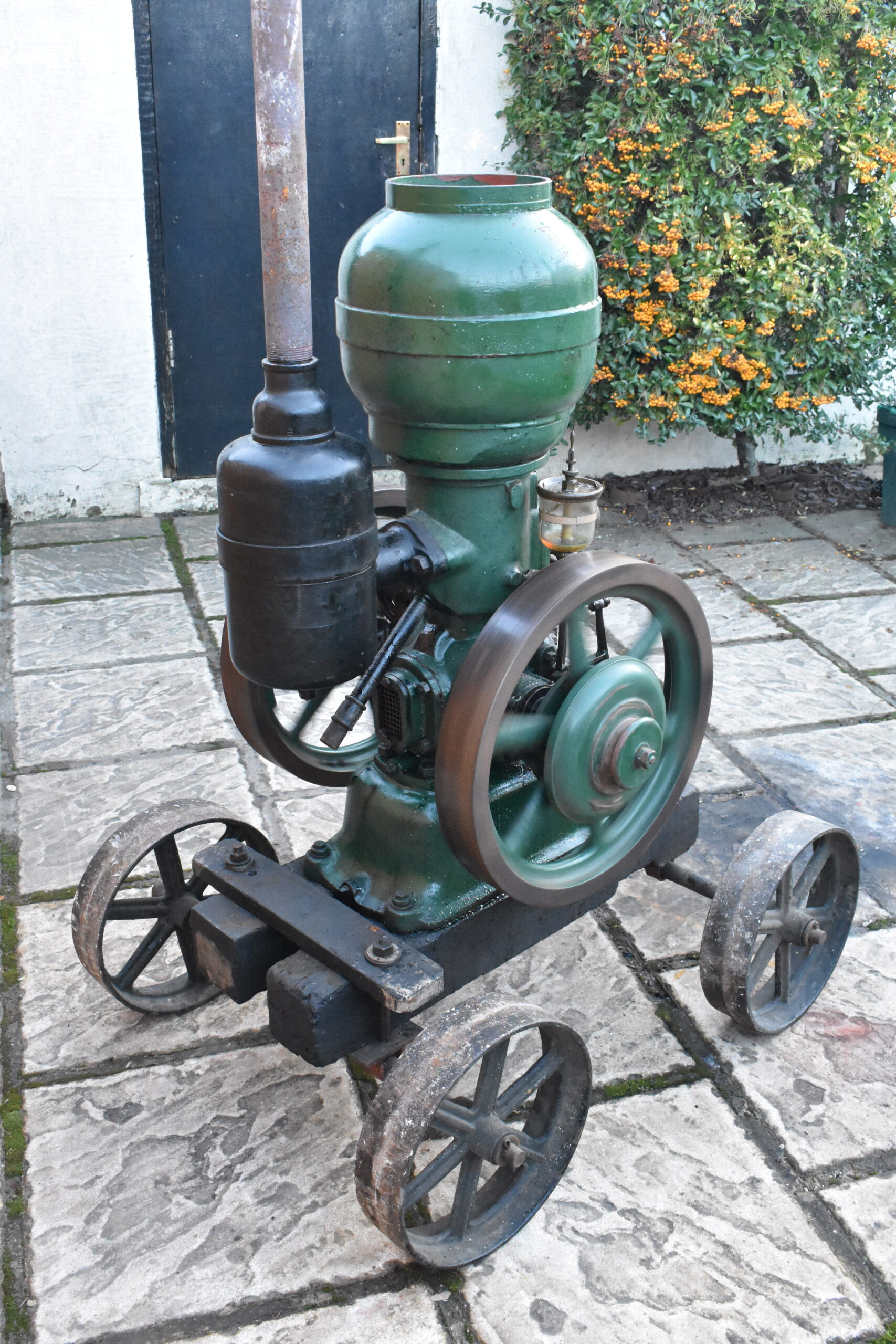
Earlier in the year a small collection of engines appeared for sale on Facebook Market Place. After a couple had remained unsold for several days, we contacted the seller and made a deal to buy a couple of the engines. A 3rd engine had by this point sold pending collection. This was a Petter M type which had an unusual conversion on the hopper.
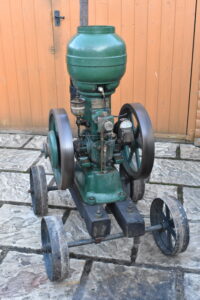
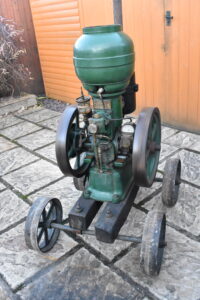
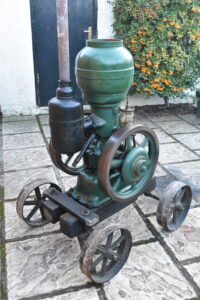 When we went to collect the engines a few days later, the seller revealed that the Petter M was back up for sale as the original buyer had turned out to be a time waster. Sadly, there are plenty of time-wasters on Market Place. A deal was quickly done on the Petter and it was loaded on to the trailer along with the other engines.
Looking on the excellent Petter archive hosted by Internal Fire Museum, on their website www.internalfire.com, it was revealed that the Petter was originally built as with a straight sided hopper, featuring the Handyman legend cast in the lip. The engine was originally tested on 16th February 1927 and was supplied to Turner Bros, Implement Agents of Hill Foundry, Attleborough, Norfolk. ( I would like to say a big thanks to Roland Craven for indexing the record so we could view this info).
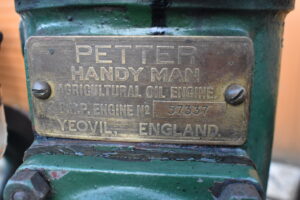
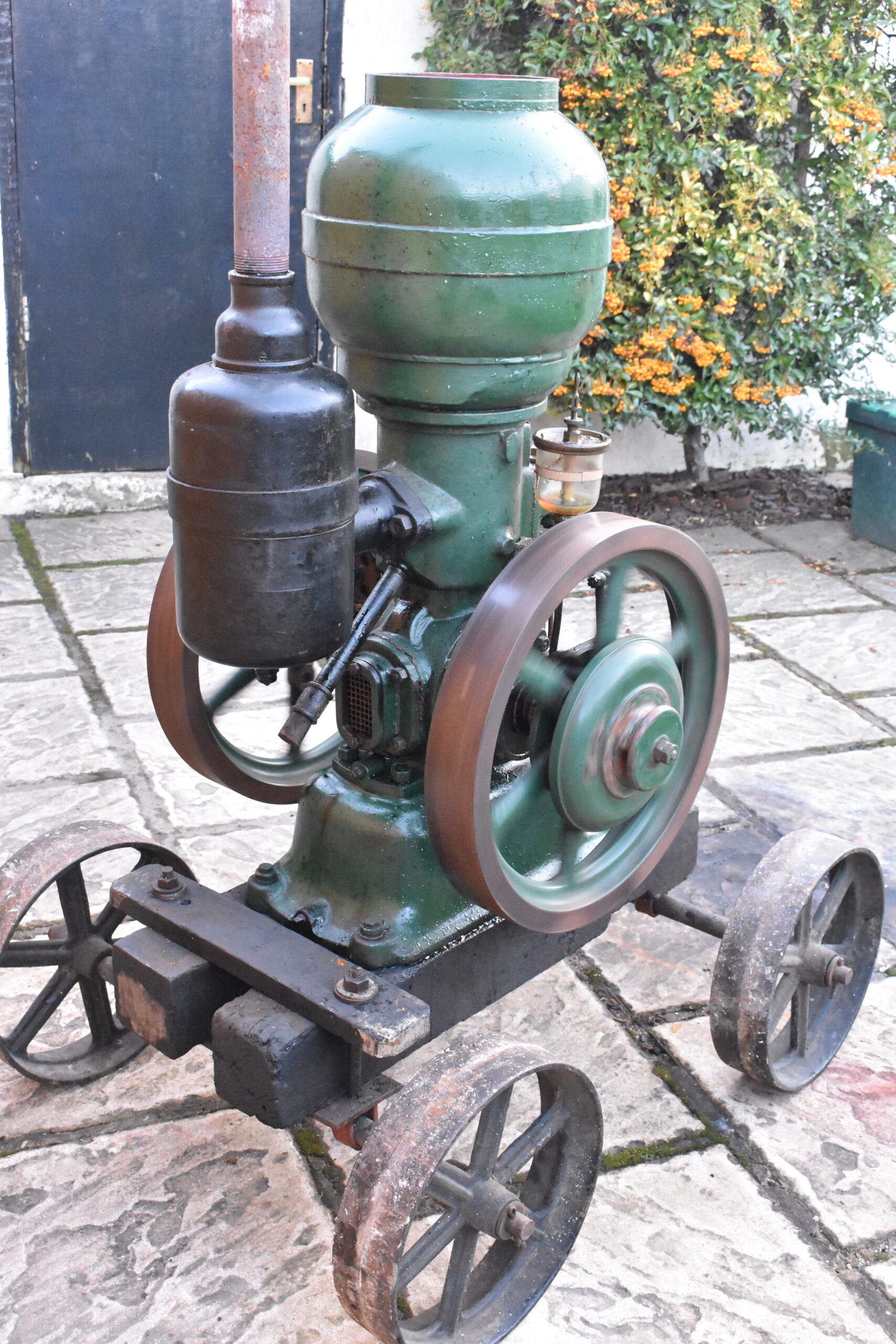
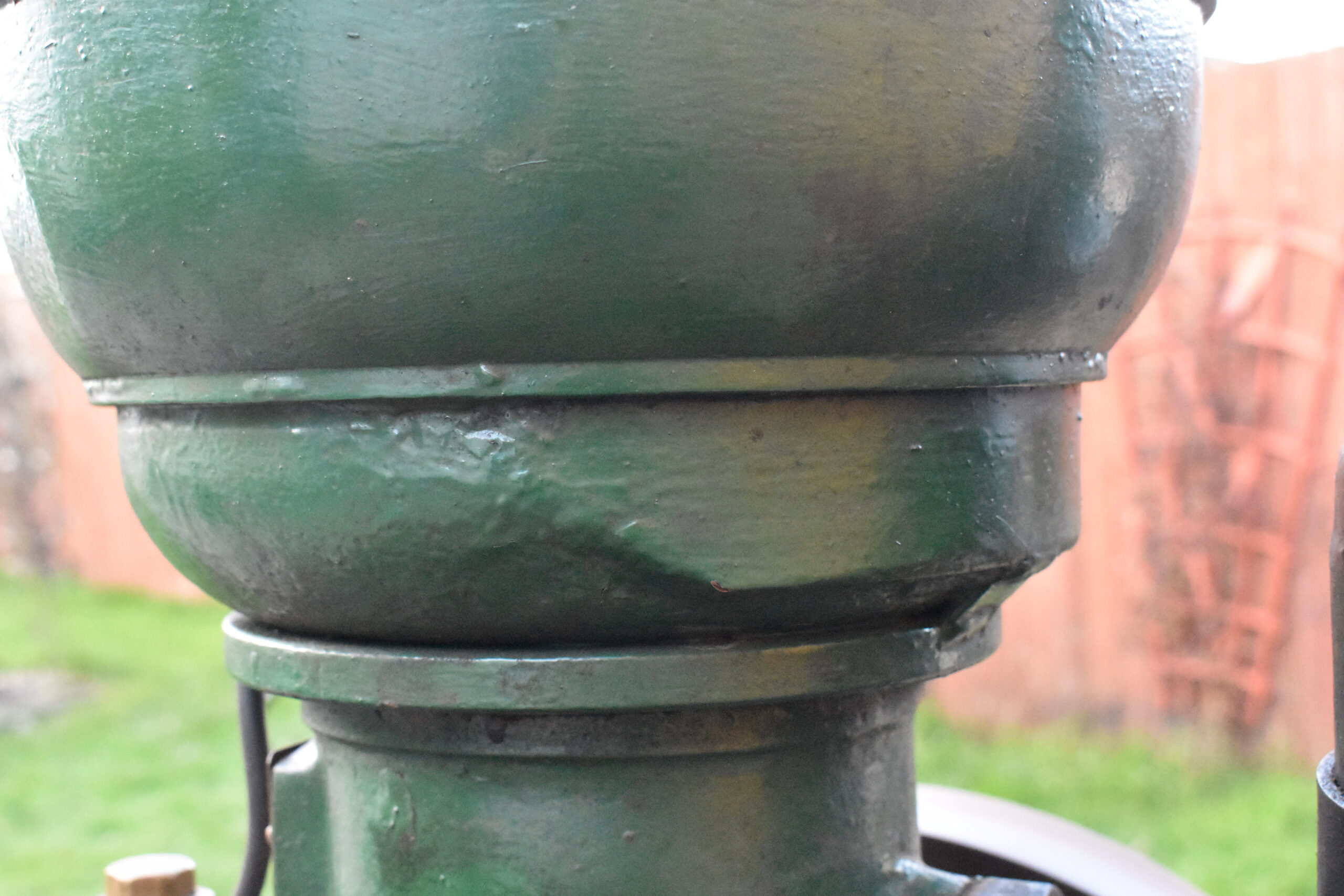
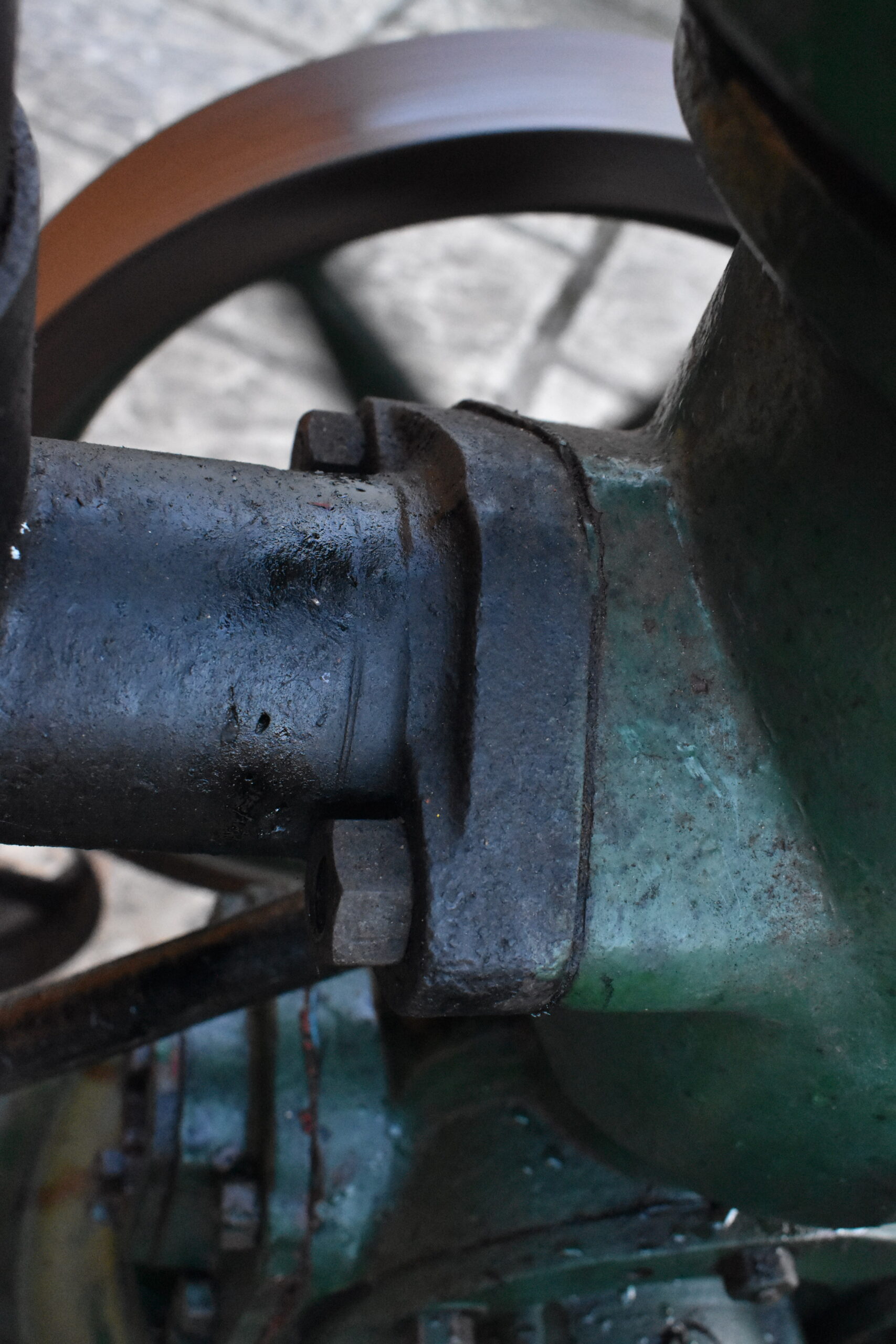
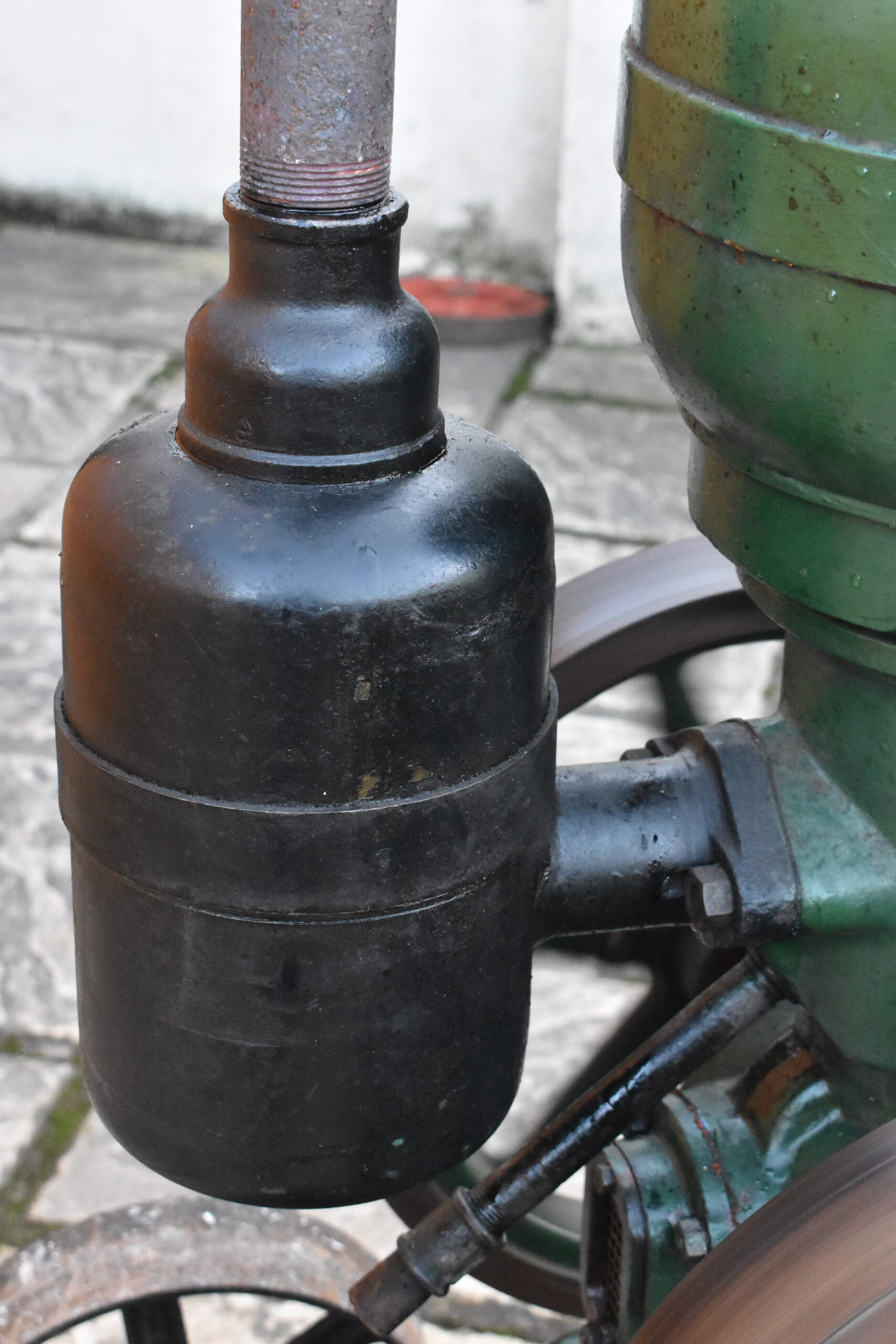
Speaking with the seller it was revealed that the Petter was saved from a scrap yard in the early 1970’s. However, before it could be saved, both the hopper & exhaust bottle had been badly smashed. The remains of both the exhaust & hopper were still bolted to the engine when it was rescued, but there wasn’t much left to work with. The chances of finding a spare Handyman hopper are slim, even today, so back then must have been more unlikely. Fortunately, rather than break the engine for spares, the owner found a solution by using a small gas bottle. The remains of the hopper were machined as was the gas bottle. Where there was no casting left to machine on the hopper a plate was welded to the remains. The gas bottle was then welded to what remained of the original hopper & the Petter Bottle Top was born. Similar work was done to the exhaust with the mounting flange surviving but not much else. The bands around the centre of the exhaust & hopper were then added to give a more interesting aesthetic appearance.
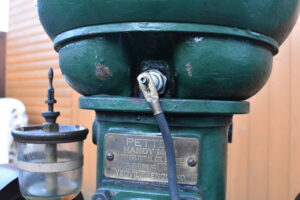
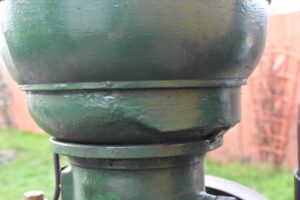
The remains of the original hopper can be seen under the bottle hopper. Where there was not enough original material left, steel plate was added.
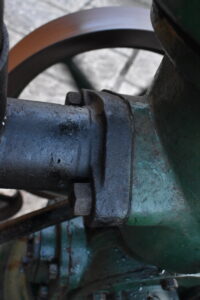
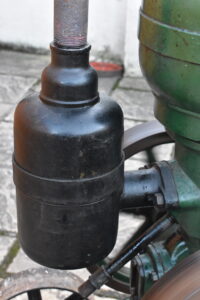
The modified exhaust pot
Fast forward to 2025 and when we got the Petter home it was found to be in excellent mechanical condition though had not apparently ran for many years. A quick check over revealed that the magneto gave a healthy spark, but upon attempting to start the engine it would not fire. It soon became clear that there was a lack of fuel, so the carburettor was unbolted and the atomiser removed. This revealed that the ball in the atomiser was stuck. Once freed, it was cleaned and everything replaced. Upon the 2nd attempted start, the Petter fired up on the 2nd swing and despite giving off quite a bit of smoke, due to some very stale fuel in the tank she steeled down and ran well.
Given that the modifications to the bottle top hopper were said to have been completed by the mid 1970’s it now means that the bottle top hopper has spent more time on the petter than the original straight sided hopper. Whilst it looks a little different, it makes for a very interesting engine and is testament to the lengths that people will go to in an effort to keep and engine running. That the modifications still hold up today some 50 years later is a credit to the skills of the previous owner.
You must be logged in to like this post.
Country: GB